Book eligible vehicles online and pay with debit card or cash at pickup.
Croatia stretches across 600 km of Adriatic coastline, mountain passes and scattered islands. Driving is the most practical way to connect Istria's hilltop towns, the Dalmatian islands reached by ferry, and inland parks like Plitvice and Paklenica. Public buses link major cities, but timetables thin out in rural areas. Split to Dubrovnik measures 230 km via the A1 motorway, Zagreb to Split 380 km, and the coastal D8 winds through stone villages where parking is tight.
4Drive Croatia partners with local rental companies in Split, Dubrovnik, Zagreb, Zadar, Pula, Trogir and Makarska. Each car in the search results carries its own terms: many vehicles are marked "no deposit" and accept a debit card or cash at pickup, while others require a credit card and a hold. The booking advance is paid online by card when you reserve. The balance and any optional extras - second driver fees, child seats, cross-border permits for Slovenia, Bosnia and Herzegovina, Montenegro, ferry tickets to islands, motorway vignettes for Slovenia - are settled when you collect the keys.
No deposit means the rental company does not place a hold on your card when you take the vehicle. The excess remains in force if damage occurs, but no funds are blocked during the rental. This option suits travellers who prefer not to lock liquidity or who use debit cards with modest limits. The filter in the search widget shows which cars qualify; availability is highest in Zadar, Split and Trogir, while Dubrovnik and Zagreb offer a broader fleet but include more cars that do require a card hold.
Pickup locations vary by supplier. Some operate counters at airport terminals, others meet you outside arrivals or deliver to hotels in the city centre. Your booking voucher lists the exact address, contact email and collection instructions. The rental agreement is signed when you collect the car; any pre-existing scratches or marks are noted in that document, and the same inspection happens when you return.
We connect you with trusted local suppliers who offer flexible payment terms, transparent conditions and a range of vehicles suited to Croatian roads and ferry schedules.
Search results flag vehicles that do not require a card hold. The excess still applies if the car is damaged, but your account stays untouched during the rental period.
Eligible cars accept a debit card or cash for the balance at pickup. The booking advance is always paid online by card; the voucher confirms which methods the supplier accepts on collection day.
Settle the remaining amount with whichever method your chosen vehicle permits. Each listing shows payment terms before you confirm, so there are no surprises at the counter.
Change your plans free of charge up to the deadline shown in your voucher. Refunds are processed to the card used for the advance within a few business days.
Collect at Split Airport (SPU), Dubrovnik Airport (DBV), Zagreb Airport (ZAG), Zadar Airport (ZAD) or Pula Airport (PUY), or arrange delivery to your accommodation in the city centre.
Manual gearboxes dominate the fleet, but automatic models appear in compact, intermediate and SUV categories. Use the transmission filter in the widget to narrow results.
A rental opens up itineraries that buses and ferries cannot match. One-way coastal roads, mountain passes and island loops reward drivers willing to navigate narrow lanes and summer queues.
Sixteen terraced lakes and travertine waterfalls lie 140 km north of Zadar via the D1 road and 110 km south of Zagreb on the D1. The drive from Zadar takes two hours through the Velebit foothills; from Zagreb the route crosses the A1 motorway junction at Karlovac before turning south on the D1. Parking fills early in July and August. A compact manual or automatic sedan handles the smooth national road without trouble. If you plan to explore gravel tracks around the Una river on the Bosnian border, notify the rental company and secure a cross-border permit for Bosnia and Herzegovina. Plitvice village has a petrol station, but fill up in Slunj or Otocac to avoid queues. Arrive before 09:00 or after 15:00 to find space in the park lots.
The Krka river drops through seven cascades between Skradin and Knin, 80 km north of Split and 60 km inland from Sibenik. Take the A1 motorway to the Skradin exit, then follow the D56 for 5 km to the main entrance. Skradinski Buk waterfall draws crowds in summer; the upstream Roski Slap entrance sees lighter traffic and offers gravel parking under oak trees. A Fiat Panda or Opel Corsa fits the narrow lanes in Skradin village, where stone walls leave little margin. Fuel is available in Sibenik or at the Petrol station on the D8 near Primosten. Combine the park with a loop through the Dalmatian hinterland: Drnis for smoked ham, the Krupa monastery canyon, and the hilltop fortress at Knin. Budget three hours from Split for the round trip, or an overnight in Skradin to walk the boardwalks at dawn.
Dubrovnik Airport (DBV) sits 20 km south of the old town on the D8 coastal road. The drive takes thirty minutes outside peak season; add an hour in July and August when tour buses clog the approach. Street parking inside the walls does not exist; use the Ilijina Glavica multi-storey 1 km north of Pile Gate or the Gruz port lots near the ferry terminal. A mini or economy car simplifies manoeuvring in the narrow streets of Lapad and Gruz. If you plan to cross into Montenegro - Kotor is 90 km south, the border 50 km - request a cross-border permit when you book and carry the vehicle registration and rental agreement. The D8 hugs the coast past Cavtat and Cilipi; watch for cyclists and pedestrians on blind curves. Fuel stations line the road at Cavtat and Gruz. Return the car at Dubrovnik Airport before exploring the pedestrian-only old town on foot.
Hvar and Brac float 10 km offshore from Split, connected by car ferries from Split harbour and Makarska. The Jadrolinija ferry from Split to Stari Grad on Hvar runs year-round and takes two hours; book online in summer or queue at the port. The Brac ferry from Split to Supetar operates hourly and lasts fifty minutes. Island roads are narrow, winding and shared with scooters; a Renault Clio or Dacia Duster handles the mix of asphalt and gravel vineyard tracks. Fuel stations operate in Hvar town, Stari Grad, Supetar and Bol; carry a full tank if you plan to explore Vidova Gora, the highest peak in the Adriatic islands, reached by a steep 13 km climb from Bol. Parking in Hvar town is scarce; arrive before 10:00 or park in Stari Grad and take the bus. Ferry tickets are paid separately at the port; timetables thin in winter.
Istria juts into the northern Adriatic, bordered by Slovenia and Italy. Pula Airport (PUY) anchors the southern tip; from there, the Istrian Y motorway runs north to Rovinj, Porec and the Slovenian border near Koper. Hilltop towns - Motovun, Groznjan, Oprtalj - perch on ridges above the Mirna river valley, connected by single-lane roads with hairpin bends. A manual compact or SUV suits the terrain; automatic models appear in the intermediate and midsize categories. Parking in old town centres is banned; leave the car in lots below the walls and walk uphill. Truffle season runs October through December; restaurants in Livade and Buzet fill quickly. Cross-border permits for Slovenia are mandatory if you drive to Piran or Trieste; request the permit when booking and carry it with the rental agreement. Fuel is cheaper on the Croatian side; INA stations are common in Pula, Rovinj and Pazin.
Two limestone canyons - Velika and Mala Paklenica - cut through the southern Velebit range 40 km north of Zadar. Exit the A1 at Maslenica, then follow the D8 coastal road south for 5 km to Starigrad-Paklenica village. The park entrance lies 2 km inland on a paved road; gravel tracks continue to mountain huts and climbing routes. A Dacia Duster or Opel Mokka manages the rutted approach to the upper trails; lower walks from the main gate suit any car. Parking costs a small fee paid at the booth. Rock climbers favour the 400-metre cliffs of Anica Kuk; hikers follow marked trails to Manita Pec cave and the Velebit ridge. Starigrad has a Tifon fuel station and a small supermarket. Combine Paklenica with a loop to Pag island via the bridge at Posedarje, 15 km south, or a detour to the Zrmanja river canyon for rafting. Allow a full day from Zadar or an overnight in Starigrad to start walks at dawn.
The Kornati islands scatter across 35 km of open Adriatic, protected as a national park with no road access. Excursion boats depart Zadar harbour daily in summer, but drivers use Zadar as a base and park near the ferry terminal or Jazine beach. Zadar Airport (ZAD) sits 10 km east of the city on the D424; the drive takes fifteen minutes. Street parking in the old town is metered and fills by mid-morning; use the multi-storey lot at Liburnska or the waterfront spaces near the Sea Organ. A Fiat Panda or Opel Corsa fits the tight medieval lanes. Day-trip boats to Kornati leave at 08:00 and return by 18:00; tickets are sold at the harbour kiosks. If you prefer a private skippered tour, book from Biograd na Moru, 25 km south on the D8, where marinas offer half-day charters. Combine Kornati with the nearby islands of Dugi Otok and Pasman, both reached by ferry from Zadar. Fuel and provisions are available in Zadar or Biograd; island villages have limited facilities.
Mljet lies 100 km northwest of Dubrovnik, a forested island circled by a single coastal road. The Jadrolinija catamaran from Dubrovnik to Polace takes ninety minutes and runs daily in summer, twice weekly in winter. Cars travel on the slower car ferry from Prapratno on the Peljesac peninsula, 120 km north of Dubrovnik via the D8, to Sobra on Mljet's eastern shore; the crossing lasts forty minutes. Island roads are narrow and winding, with limited passing points; a manual compact or economy car suffices. Two saltwater lakes - Veliko and Malo Jezero - fill the western third of the island; a Benedictine monastery occupies an islet in the larger lake. Parking at the park entrance is free outside July and August. Fuel is sold in Pomena village, but stations close in winter; fill up in Korcula or Orebic before boarding the ferry. Combine Mljet with the Peljesac wine route - Dingac and Postup vineyards cling to south-facing slopes above the D414 road from Orebic to Ston.
The fleet ranges from three-door city cars to seven-seat MPVs. Actual availability depends on your dates and pickup location; the search widget shows real-time inventory.
| Car Model | Category | Transmission | Best For |
|---|---|---|---|
| Fiat Panda | Mini | Manual | Old town streets and narrow parking |
| Opel Corsa | Economy | Manual | Couples, coastal day trips |
| Renault Clio | Compact | Manual / Automatic | City and highway mix |
| Kia Ceed | Intermediate | Manual / Automatic | Families, motorway comfort |
| Dacia Duster | SUV | Manual | Island ferries and gravel vineyard roads |
| Opel Mokka | Compact SUV | Manual | Coastal hills and Plitvice access |
| Peugeot 3008 | Midsize SUV | Automatic | Groups, longer tours with luggage |
| Opel Zafira | 7-seater MPV | Manual | Extended families and group tours |
Models listed are examples; the search widget displays cars confirmed by each supplier for your dates. If you need higher ground clearance or part-time four-wheel drive for mountain passes and unpaved tracks, browse our selection of SUVs and pickups for mountain roads equipped to handle gravel routes in Biokovo, Velebit and the Dinara range.
The process takes a few minutes online. You receive a voucher by email, then collect the keys at the address shown in that document.
Enter your pickup location, dates and times in the widget above. Results list vehicles available from local suppliers in that city or airport. Each car shows category, transmission, deposit terms and accepted payment methods. Apply filters for no-deposit, automatic or specific seating capacity.
Select a car and complete the reservation form. The booking advance is charged to your card immediately; cash payments are not accepted online. You will see the balance due at pickup and which methods the supplier accepts for that amount.
An email arrives within minutes containing the voucher, supplier contact details, exact pickup address and a list of required documents. Print the voucher or save it on your phone. Check the opening hours and any special instructions for airport pickups.
Present your voucher, passport, driving licence and payment card or cash at the counter. The agent prepares the rental agreement, notes existing damage in the contract, and hands over the keys. Optional extras - child seats, additional driver, cross-border permits - are paid on the spot.
Not every car qualifies, and the excess remains in place. Here is what the term means and which documents you need.
Each vehicle in the search results carries a tag showing whether a deposit hold is required. Cars marked "no deposit" do not block funds on your card when you collect the keys; you drive away without any pending authorisation. The excess still applies: if the car is damaged or stolen, you remain liable up to that amount, but no hold ties up your account during the rental period. Requirements vary by model, not by category; a Dacia Duster from one supplier may need a hold, while another Duster from a different company does not. Zadar, Split and Trogir have the highest share of no-credit-card offers; Dubrovnik and Zagreb have more cars overall but some require a card hold. Use the deposit filter in the widget to see only eligible vehicles.
Our partner suppliers in Split, Dubrovnik, Zagreb and Zadar have operated for years in the Croatian market. They track customer behaviour and find that renters who choose no-deposit terms drive carefully, knowing that any excess claim will be settled directly. Local firms avoid the administrative cost of processing holds and releases; instead, they rely on transparent contracts and post-rental inspections. There are no hidden penalty clauses. The rental agreement signed at pickup lists the excess, insurance coverage and any exclusions. Travellers who read customer reviews report clear terms and straightforward returns.
Bring your passport, your home-country driving licence held for the minimum period stated in the car's terms, and an International Driving Permit if your licence uses non-Latin script; an IDP is recommended in any case. A card is required to pay the booking advance online; the balance at pickup can be settled by debit card or cash if the vehicle accepts those methods. Minimum age and years of licence holding vary by model and appear in the search results before you book. If you hold only a debit card and worry about limits, contact your bank to raise the daily withdrawal cap temporarily. Full payment terms and a checklist of required documents are set out on our payment methods page.
Croatian roads range from smooth motorways to single-track island loops. A few rules and local habits will keep you moving.
We work with suppliers in coastal cities, islands and the capital. Each location offers a choice of counters, meet-and-greet or hotel delivery depending on the company.
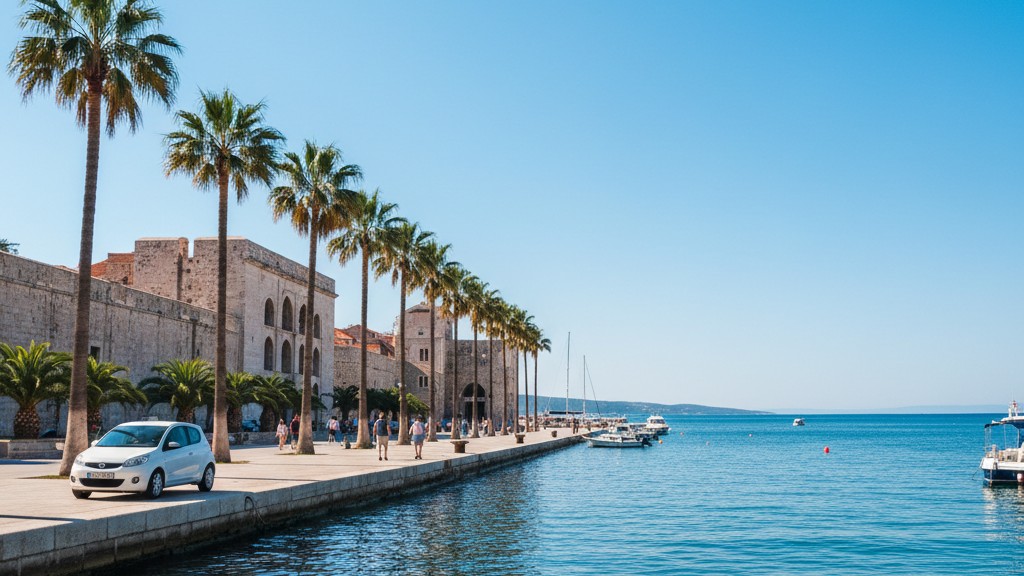
Split Airport (SPU) lies 25 km west of the city centre on the D8 coastal road; the drive takes thirty minutes. Rental counters cluster in the arrivals hall; some suppliers meet clients outside the terminal with a name board. City-centre pickup is available from offices near the Riva waterfront or the ferry terminal in Gruz. Split is the gateway to the central Dalmatian islands and Plitvice Lakes National Park, 140 km north via the D1. The A1 motorway runs east to Zagreb, 380 km and four hours by car. Use Split as a base for day trips to Trogir, 25 km west, and the Cetina river canyon near Omis, 20 km south.
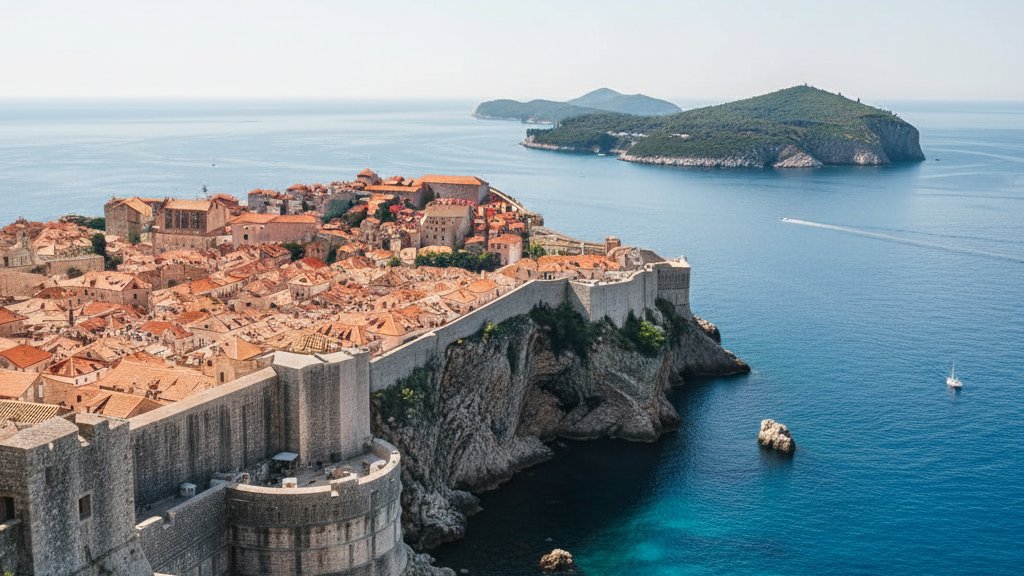
Dubrovnik Airport (DBV) sits 20 km south of the old town on the D8. Rental desks occupy the terminal ground floor; agents from smaller companies wait outside with signs. Hotel delivery is common in Lapad and Gruz; the voucher states the meeting point. Dubrovnik anchors the southern coast, 50 km from the Montenegro border and 230 km from Split via the A1 and D8. Cross-border permits are required for Montenegro, Bosnia and Herzegovina day trips to Kotor, Mostar or the Neretva delta. The Peljesac peninsula and Mljet island lie within an hour's drive north.
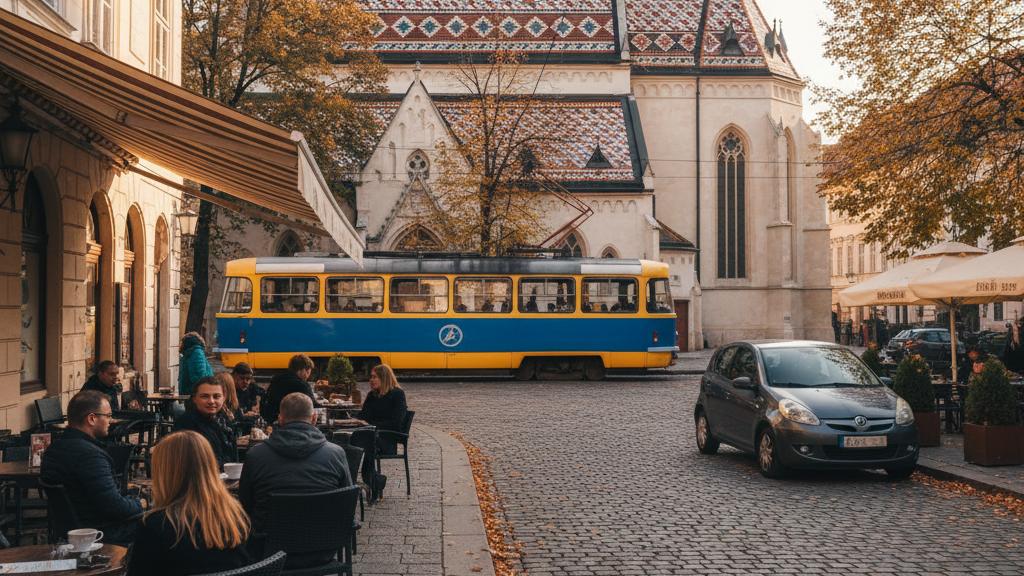
Zagreb Airport (ZAG) is 17 km southeast of the city on the A3 motorway; the journey takes twenty minutes. Rental counters line the arrivals corridor. Downtown pickup points operate near the central bus station and along Vukovarska Avenue. Zagreb is the hub for northern Croatia: 140 km from Ljubljana in Slovenia, 200 km from the Plitvice Lakes and 380 km from Split. The A1 motorway runs south through Karlovac to the coast; the A3 heads east toward Slavonia and Serbia, requiring a cross-border permit. Use Zagreb for circuits of the Zagorje hills, Samobor and Varazdin.
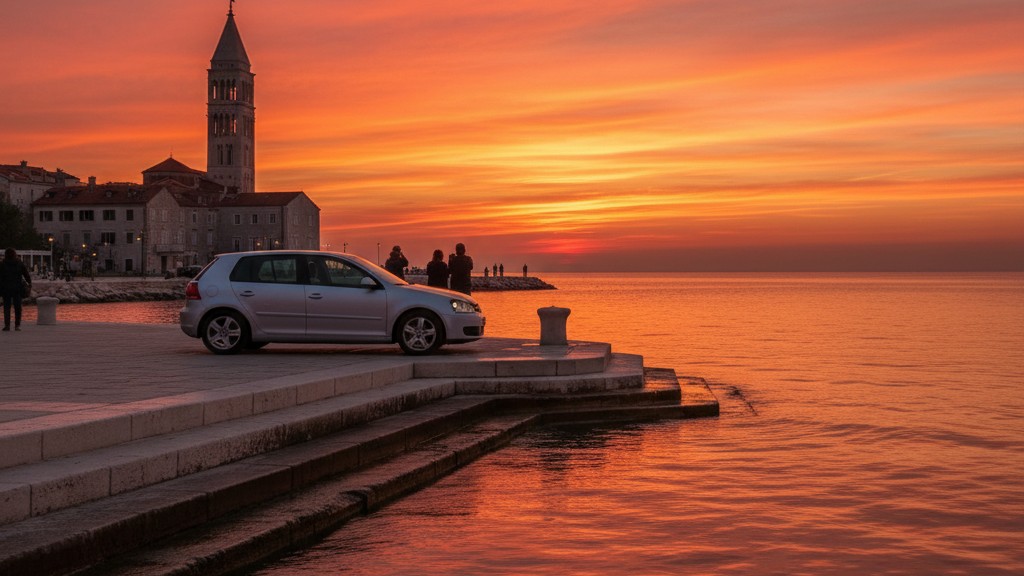
Zadar Airport (ZAD) lies 10 km east of the old town on the D424; the drive takes fifteen minutes. Rental offices are grouped in the terminal; smaller operators arrange meet-and-greet at the taxi rank. City pickup is offered near the harbour and Jazine beach. Zadar is the gateway to the northern Dalmatian coast, Paklenica National Park 40 km south, and the Kornati islands reached by excursion boat. Plitvice Lakes are 140 km inland via the D1. The A1 motorway runs north to Rijeka and south to Split, 160 km and ninety minutes away.
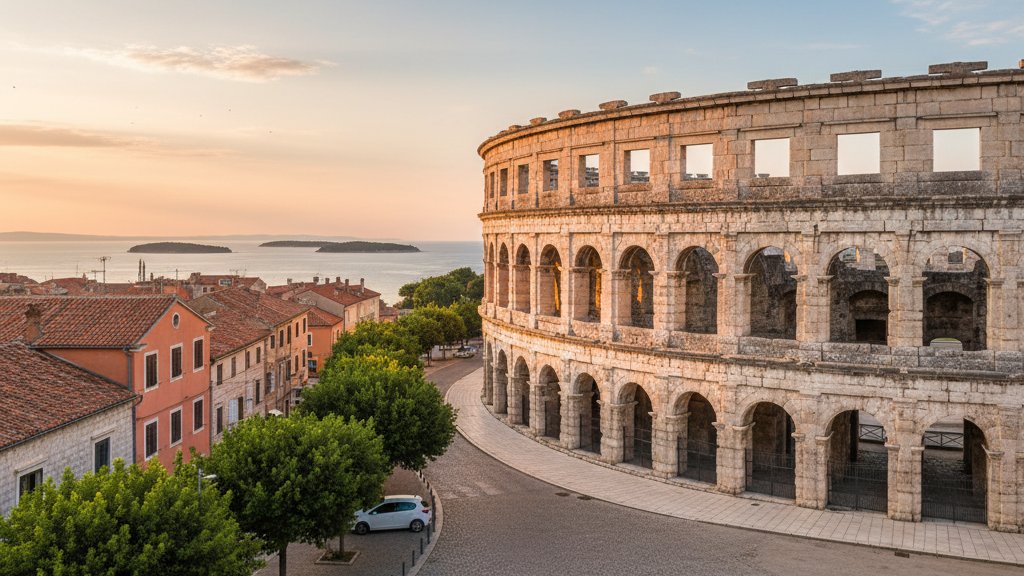
Pula Airport (PUY) sits 6 km northeast of the city on the Valtura road. The terminal is small; rental counters occupy one side of the hall. Downtown offices operate near the Roman arena and the harbour. Pula is the base for exploring Istria: Rovinj 35 km north, the hilltop towns of Motovun and Groznjan 50 km inland, and the Slovenian border at Secovlje 80 km northwest. The Istrian Y motorway connects Pula to Rijeka in 90 minutes. Cross-border permits for Slovenia are required if you drive to Piran or Koper. Fuel and provisions are readily available; the region is less seasonal than Dalmatia.
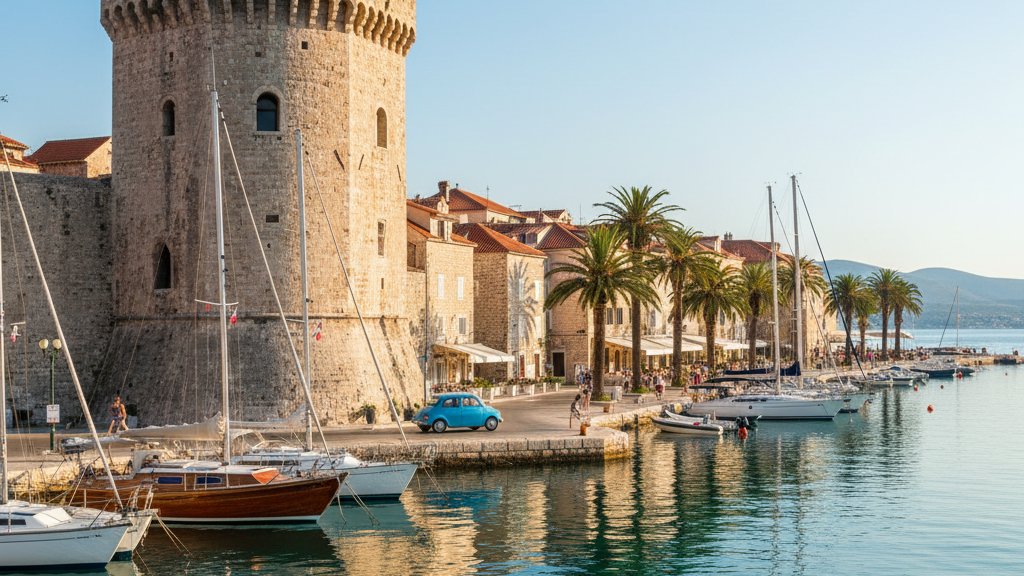
Trogir occupies an island in the channel between the mainland and Ciovo, 5 km from Split Airport and 25 km west of Split city. Most suppliers deliver to hotels in the old town or meet clients at the bridge car park on the mainland side. The historic centre is pedestrian-only; parking lies outside the west gate or on Ciovo island. Trogir serves as a quieter alternative to Split for travellers heading to Krka National Park, 60 km north, or the central Dalmatian islands. The D8 coastal road runs through the town; the A1 motorway junction at Seget is 3 km east.
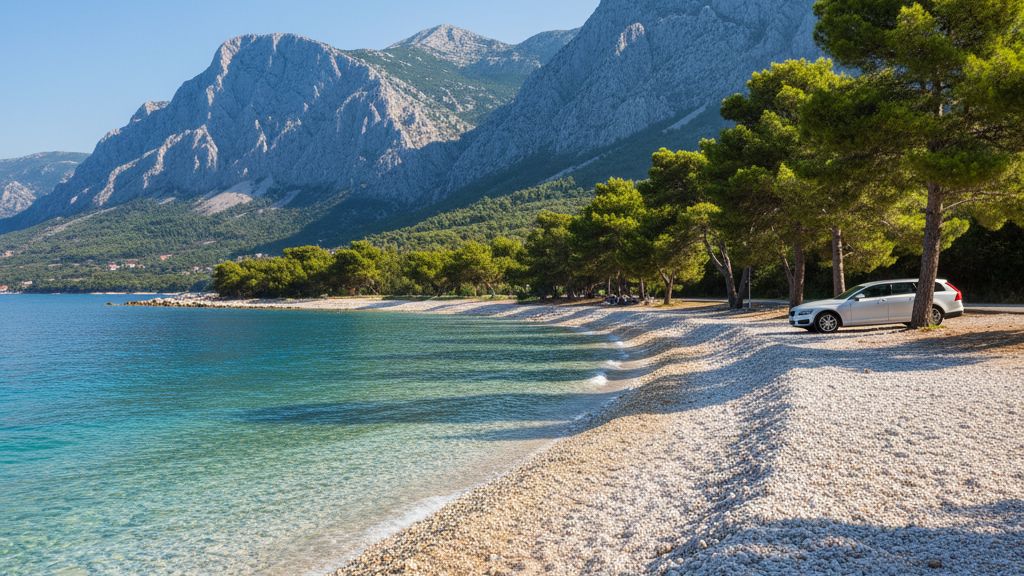
Makarska sits midway between Split and Dubrovnik on the D8 coastal road, backed by the Biokovo mountain range. Rental offices cluster near the harbour and the Riva promenade; hotel delivery is standard. The town is 60 km south of Split and 140 km north of Dubrovnik. A toll road climbs from Makarska to the Biokovo Skywalk at 1,228 m, requiring a Dacia Duster or similar for steep gradients. Ferries to Sumartin on Brac island leave from the harbour; the crossing takes one hour. Use Makarska as a base for the Cetina river, Imotski lakes and the Neretva delta.
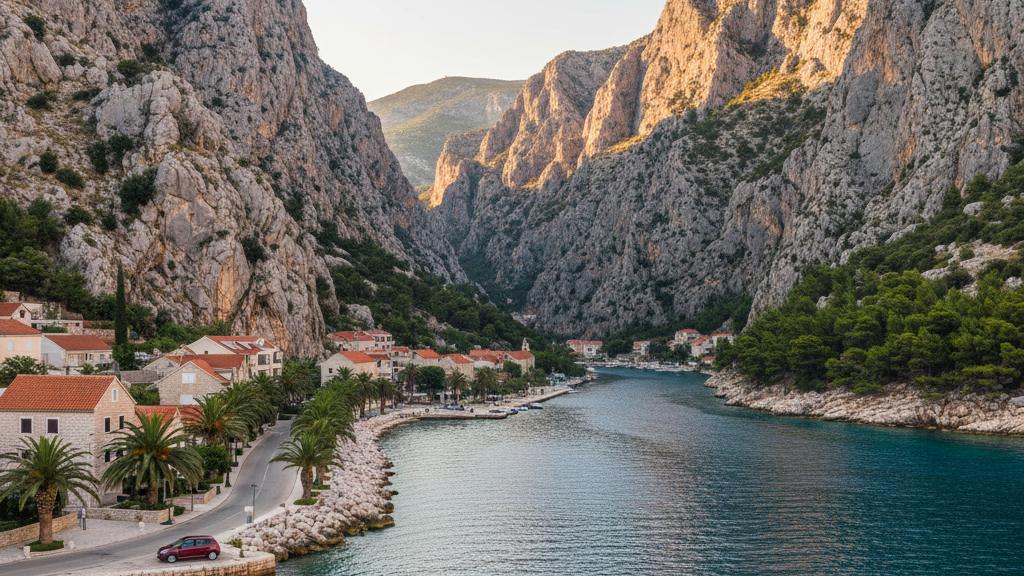
Omis guards the mouth of the Cetina river canyon, 20 km south of Split on the D8. Rental suppliers operate from the waterfront or deliver to hotels along the beach. The old town's narrow lanes ban cars; parking is found on the south bank of the river or at the public lot near the Mirabella fortress. Omis is a hub for rafting and zip-lining on the Cetina; the canyon road continues inland to Zadvarje and the Red Lake near Imotski. The town lies 70 km north of Makarska and 40 km south of Trogir. Split Airport is thirty minutes away via the D8.
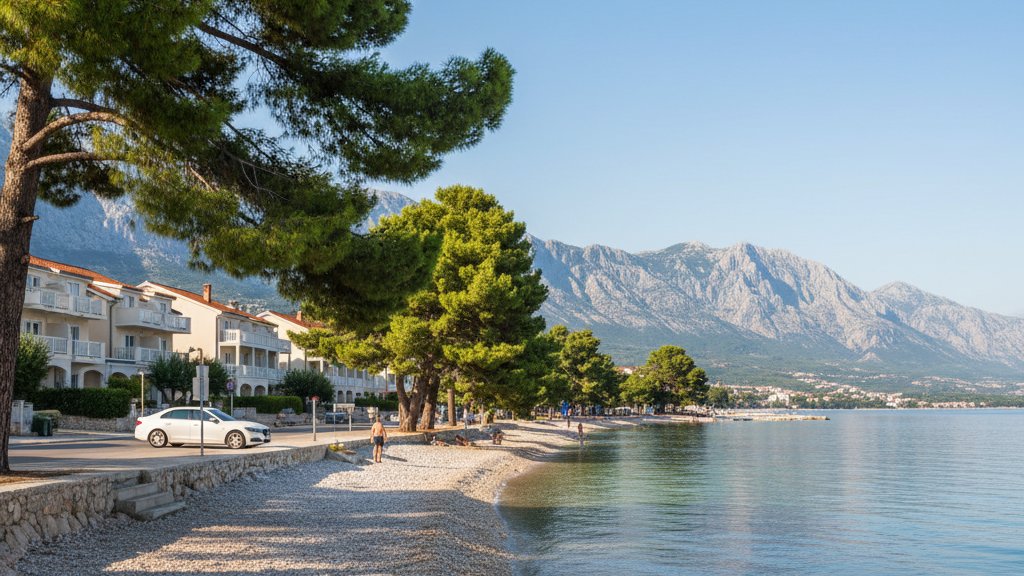
Podstrana stretches along the D8 between Split Airport and the city, 8 km southeast of Split centre. Hotels line the beach; rental agents deliver to reception desks or meet clients at the Zvoncac marina. The area serves as a resort base with easy access to Split, Trogir, Omis and the A1 motorway. Street parking is free outside July and August but fills quickly in peak season. Podstrana's position midway between the airport and Split old town makes it convenient for one-way rentals and early-morning ferry departures to the islands.
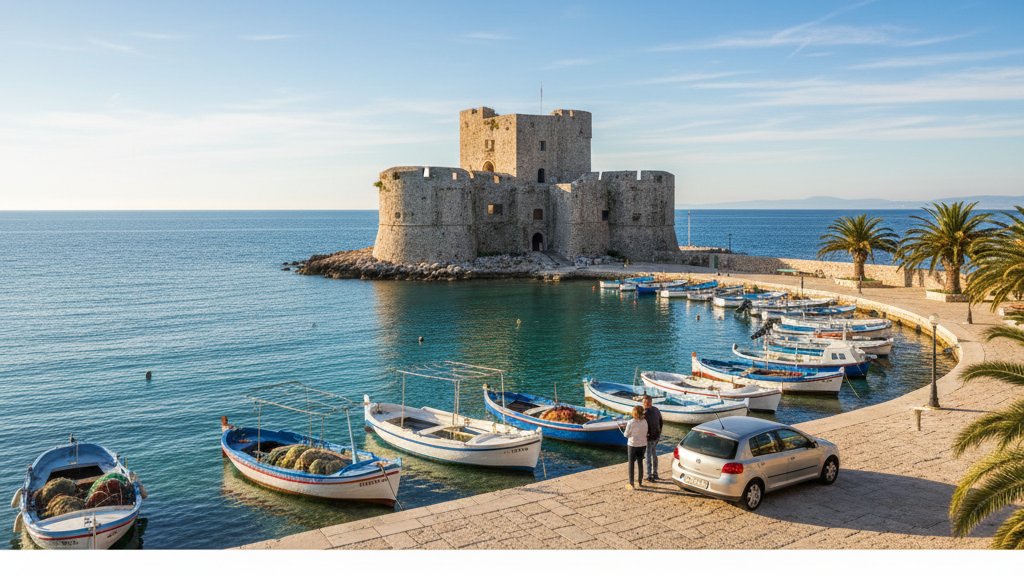
Kastel Sucurac is one of seven castle towns strung along the coast between Trogir and Split, 10 km from Split city centre and 12 km from Split Airport. Rental suppliers deliver to the marina or hotel lobbies. The D8 runs through the settlement; parking is tight in the old quarter but available on the waterfront. The town is less touristed than Split or Trogir and offers lower accommodation rates. Use it as a base for Split city, Krka National Park and island ferries from Split harbour, all within thirty minutes by car.
Common queries about rental terms, paperwork and driving logistics. For more detail, visit our FAQ page or read customer reviews.
Vehicles tagged "no deposit" in the search results do not require a hold on your card when you collect the keys. The excess remains in force if damage occurs, but no funds are blocked during the rental. Each car sets its own terms; one Renault Clio may need a hold, another may not. Zadar, Split and Trogir have the most no-deposit offers. Use the filter to see eligible cars, then check the voucher for exact payment instructions.
Not for all vehicles. Cars marked "no credit card" accept a debit card or cash for the balance at pickup. The booking advance is always paid online by card when you reserve. The voucher lists which methods your chosen car accepts. If you only have a debit card, ask your bank to raise the daily limit temporarily so you can cover the balance and any optional extras.
You pay a booking advance by card online when you complete the reservation. The balance and any extras - child seats, second driver fees, cross-border permits, ferry tickets, motorway vignettes - are settled at the counter when you collect the car. Your voucher states the outstanding amount and accepted payment methods for your specific vehicle. Cash is never accepted online.
Bring your passport, your home-country driving licence valid for at least the period shown in the car's terms, and a card or cash to pay the balance. An International Driving Permit is recommended if your licence uses non-Latin characters; some suppliers insist on one, others do not. Minimum age and years of licence holding vary by vehicle and appear in the search results before you book.
Cross-border travel requires a permit issued by the rental company. Request permits for Slovenia, Bosnia and Herzegovina, Montenegro or Serbia when you book; they are typically charged as a one-time fee. Carry the permit, rental agreement and vehicle registration when you cross. Not all suppliers allow travel to every country; check the car's terms during booking. Notify the company if you plan to use ferries between countries.
Car ferries to Hvar, Brac, Korcula, Vis and Mljet are operated by Jadrolinija and local companies. You buy tickets at the port or online; rental companies do not include ferry fares. Arrive thirty minutes before departure to queue in the vehicle lane. Timetables and frequencies are published on the Jadrolinija website; sailings thin outside summer. If your itinerary includes multiple islands, check schedules when you plan your route.
Rental counters are located in the arrivals hall at Split Airport (SPU). Some smaller suppliers meet clients outside the terminal with a name board. Your voucher lists the exact desk or meeting point. If you land late, check the supplier's operating hours in the voucher; most desks close by 22:00. Split Airport is 25 km from the city on the D8; parking at the terminal is metered. Fuel stations lie on the D8 near Kastel Sucurac.
Manual gearboxes dominate the fleet and are suited to Croatian roads. Automatics appear in compact, intermediate and SUV categories but cost more and are fewer in number. If you are uncomfortable with a manual, filter the search by transmission and book early. Hill starts on coastal roads and gravel tracks in national parks are easier with an automatic, but manuals offer better fuel economy and wider availability.
One-way rentals between cities - Split to Dubrovnik, Zagreb to Split, Pula to Zadar - are possible with most suppliers. A one-way fee is charged, stated in the search results and booking summary. The amount varies by distance and direction; returns to smaller towns cost more. Not all companies permit one-way rentals to every location. Confirm the drop-off point when you book and allow extra time at the return office for inspection.
Winter tyres or all-season tyres are compulsory from 15 November to 15 April on roads where signs indicate the requirement. Mountain passes in Gorski Kotar, Lika and the Velebit range enforce this rule; coastal areas rarely see snow. Rental cars are equipped with appropriate tyres for the season. Carry snow chains if you plan to drive in Plitvice or along the D1 corridor in January or February; suppliers provide them on request. Check road conditions on HAK, the Croatian auto club website.
The search widget at the top of this page shows live availability from local suppliers in Split, Dubrovnik, Zagreb, Zadar, Pula, Trogir and Makarska. Filter by no-deposit, automatic transmission or vehicle category. Reserve online in two minutes, pay the booking advance by card, and receive your voucher by email. Settlement methods for the balance - debit card or cash - are confirmed for each car before you complete the booking.